Commercialise: universities, TTOs, accelerators, and venture builders

Every disclosure and every cohort, assessed to one standard.
TACTIC gives a technology transfer office or an accelerator one documented read on every disclosure and applicant, so decisions are fair across faculties and cohorts and defensible to the committee.
How it works
Disclosures arrive from everywhere. Judgement varies.
A home-made scorecard in a spreadsheet, rebuilt for each intake, with weights nobody can defend a year later.
Programme and application management software. It collects submissions and moves them through stages, and leaves the judging to the people.

The same standard, whichever lab it came from.
Every venture is scored on the same canonical rubric and weights, so any two are directly comparable.

Every decision, on the record.
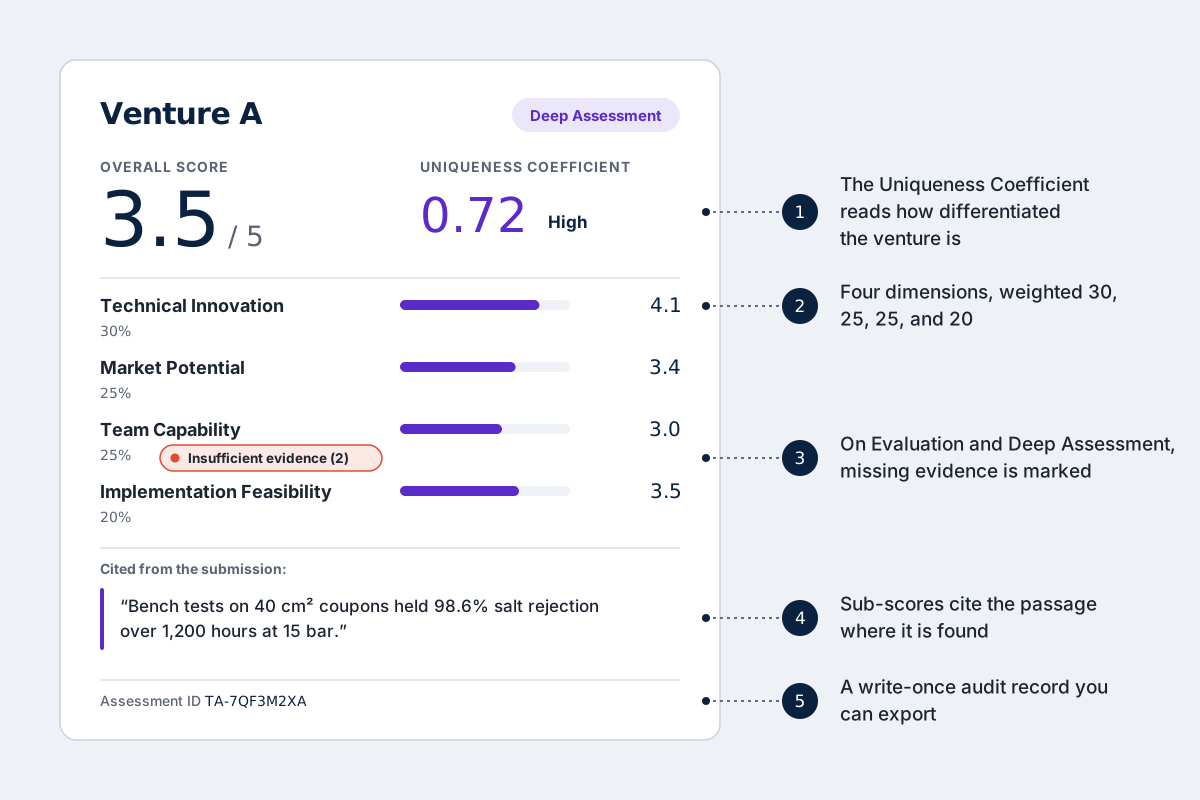
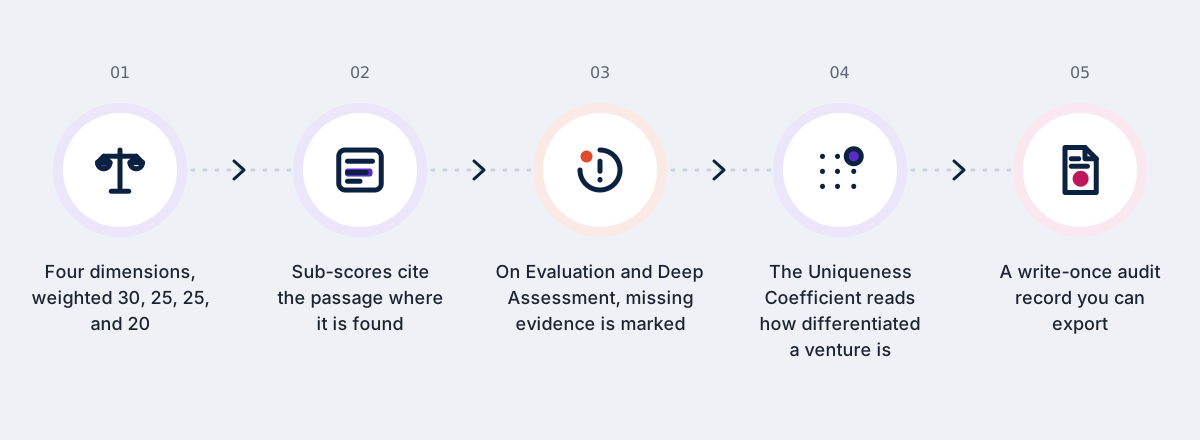
Every assessment has a write-once audit record behind it, which you can export.

Your disclosure pipeline, ranked to a standard.
Submit a batch of ventures, group them into a cohort, rank them, and export the result.

On Evaluation and Deep Assessment, missing evidence is marked as missing, never quietly scored as weak.
On Evaluation and Deep Assessment, missing evidence is marked as missing, never quietly scored as weak.

A method your committee can stand behind.
TACTIC scores a venture on four weighted dimensions: technical innovation, market potential, team capability, and implementation feasibility.
- Four dimensions, weighted 30, 25, 25, and 20
- Evaluation and Deep Assessment score twenty sub-dimensions, and cite the passage of the submission behind a sub-score wherever that passage is found in the submission.
- The Uniqueness Coefficient reads how differentiated a venture is, from its patent landscape, competitive position, technical differentiation and likely impact. Live on Deep Assessment and Dossier.
- The method is documented, weighted, and anchored in established frameworks such as the NASA TRLs. It scores the factors rather than predicting an outcome.


Run multi-round judging with blind review and declared conflicts of interest.

From a scored cohort to a built one
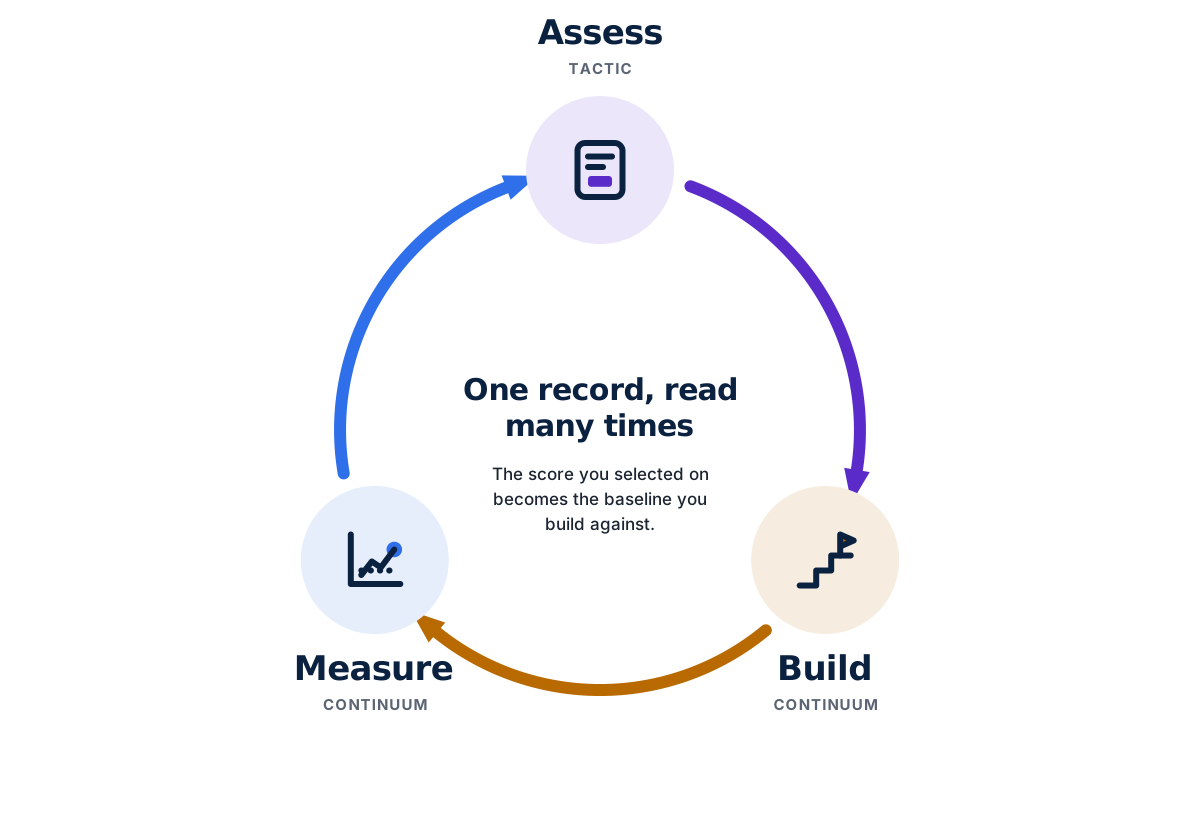
TACTIC takes a venture as far as the assessment, the score, and the report. Continuum is what comes after: how a venture, or a whole cohort, gets better from there.
Continuum begins with a TACTIC-scored, selected cohort, and is never sold standalone.
- Progress is a score moving, not a box ticked. At launch (v2)